Automotive Interior Solutions: Practical Applications and Benefits
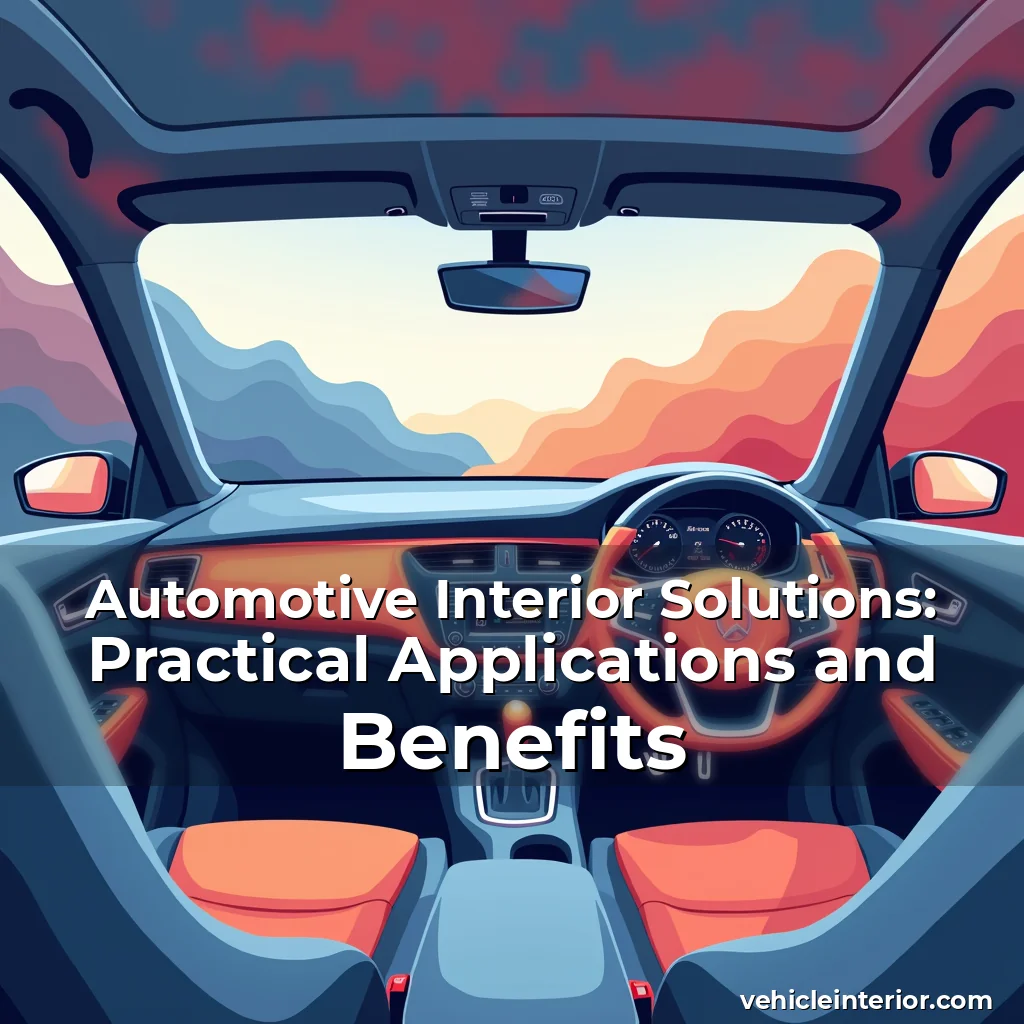
The Future of Automotive Interiors: Innovations Shaping Modern Vehicle Design
In an era where technology and design converge seamlessly, automotive interior solutions have evolved from mere functional spaces to dynamic environments that enhance both comfort and safety. From advanced seating systems to intelligent climate controls, today’s interiors are engineered to meet the demands of modern drivers and passengers.
This transformation is driven by advancements in materials science, digital integration, and user-centric design principles. As we explore these innovations, we uncover how they redefine our driving experiences and set new benchmarks for quality and performance.
Redefining Comfort Through Advanced Seating Technology
The foundation of any exceptional automotive interior lies in its seating system. Contemporary vehicles now feature ergonomically optimized seats designed to provide unparalleled support during long journeys while maintaining aesthetic appeal.
Modern seat designs incorporate memory foam, adjustable lumbar support, and heating/cooling elements to cater to diverse preferences. These features not only enhance physical comfort but also contribute significantly to driver alertness and overall well-being.
- Ergonomic Adjustments: Seats can be tailored to individual body types through multi-directional adjustments, reducing fatigue during extended drives.
- Climate Control Integration: Heated and cooled cushions offer year-round comfort, adapting quickly to external temperature changes.
Vehicles equipped with premium seating options often include massage functions powered by electric motors. This innovation helps alleviate muscle tension and promotes relaxation without compromising safety standards.
Some manufacturers utilize lightweight yet durable materials such as carbon fiber composites in their seat frames. This approach reduces weight while ensuring structural integrity, contributing positively to fuel efficiency and handling dynamics.
Intelligent Climate Management Systems
Achieving optimal cabin temperatures has become more precise than ever thanks to smart climate control technologies. These systems use sensors and algorithms to maintain ideal conditions based on occupancy levels, sun expo
Advanced HVAC units now feature zone-specific temperature settings, allowing different areas within the vehicle to operate at varying degrees simultaneously. This level of customization ensures every occupant enjoys personalized thermal comfort regardless of their position inside the car.
Sensors embedded throughout the interior detect humidity levels and adjust airflow accordingly. By integrating real-time data processing capabilities, these systems prevent over-drying or excessive moisture buildup, enhancing overall air quality.
Data-Driven Ventilation Optimization
Recent studies indicate that properly managed ventilation can reduce driver fatigue by up to 25%. Intelligent systems analyze CO₂ concentrations and automatically increase fresh air intake when necessary.
These responsive mechanisms work behind the scenes to ensure occupants remain comfortable and alert throughout their journey. The ability to monitor environmental factors continuously sets current models apart from traditional ventilation approaches.
With touchscreens and voice command interfaces becoming standard features, controlling climate settings is now more intuitive than ever before. Drivers can easily customize their environment using simple gestures or verbal instructions.
Materials Science Revolutionizing Interior Aesthetics
The choice of materials plays a crucial role in defining both the visual appeal and durability of automotive interiors. Manufacturers are increasingly turning towards sustainable alternatives without sacrificing luxury or functionality.
Recycled plastics and plant-based fabrics are gaining popularity due to their eco-friendly nature and versatility in application. These materials help reduce environmental impact while still meeting high-performance expectations.
Leather alternatives made from pineapple leaves (Piñatex) or mushroom mycelium offer cruelty-free options that mimic genuine leather textures beautifully. Such innovations reflect growing consumer demand for ethical production practices across industries.
Carpets woven from recycled nylon fibers provide excellent stain resistance alongside soft underfoot feel. This combination makes them particularly suitable for families who prioritize practicality along with style.
Interior trim components benefit greatly from composite materials that combine strength with light weight properties. For instance, some dashboard panels integrate aluminum alloys reinforced with polymer matrices for enhanced resilience against wear-and-tear.
Digital Integration Enhancing User Experience
The rise of connected cars has ushered in a new age of digital integration within automotive interiors. Touchscreen displays serve as central hubs for navigation, entertainment, and vehicle diagnostics.
High-resolution screens with gesture recognition allow users to interact intuitively with various functions. Voice assistant compatibility further simplifies tasks such as adjusting music volume or setting destination points hands-free.
Wireless charging pads positioned strategically around the cabin accommodate smartphones and other devices effortlessly. This eliminates clutter associated with tangled cables while promoting convenience during travel.
Augmented reality head-up displays project essential information onto windshields, enabling drivers to stay focused on the road rather than looking down at dashboards. Such features enhance situational awareness and improve reaction times.
Built-in Wi-Fi hotspots enable seamless connectivity between mobile devices and onboard infotainment systems. Passengers can stream movies or access online services comfortably even miles away from home networks.
Smart Safety Features Embedded Within Interiors
Vehicle interiors are no longer passive spaces; instead, they actively participate in ensuring occupant safety through integrated sensor arrays and automated response mechanisms.
Collision avoidance systems employ cameras and radar sensors located discreetly within door panels and ceiling structures. These components constantly scan surroundings to detect potential hazards promptly.
Seatbelt pretensioners activate instantly upon detecting sudden deceleration, securing passengers effectively before impact occurs. Similarly, airbag deployment sequences rely heavily on proximity sensors placed near front and side windows.
Biometric authentication methods like fingerprint scanners secure access to sensitive controls while preventing unauthorized usage. This adds another layer of protection especially useful in shared transportation scenarios.
Emergency assistance protocols initiate automatically if crash sensors register severe impacts. In such cases, location data is transmitted wirelessly to emergency responders facilitating faster rescue operations.
Eco-Friendly Manufacturing Practices
As global awareness regarding sustainability grows, automakers are adopting greener manufacturing techniques aimed at minimizing ecological footprints without compromising product excellence.
Prioritizing locally sourced raw materials reduces transportation emissions linked with conventional supply chains. This shift supports regional economies while lowering carbon output significantly.
Water-based adhesives replace solvent-heavy counterparts commonly used in upholstery assembly processes. These safer alternatives minimize volatile organic compound release improving indoor air quality post-installation.
Energy-efficient lighting solutions such as LED strips consume less power compared to traditional incandescent bulbs providing equivalent illumination levels consistently over time periods.
Implementing closed-loop recycling programs allows old parts to be repurposed efficiently decreasing landfill waste generation substantially across entire production cycles.
Tailored Experiences via Personalization Options
Today’s market offers extensive personalization choices enabling customers to craft bespoke interiors reflecting their unique tastes and lifestyles.
Custom color schemes spanning vibrant hues to muted tones let buyers express themselves visually within enclosed spaces created specifically for them.
Fabric selections range widely including microfiber suiting professionals seeking sophistication versus sporty mesh variants appealing more towards younger demographics embracing bold styles.
Optional add-ons like ambient lighting packages permit mood-setting through programmable LED arrays responding dynamically according to pre-set profiles stored digitally aboard each unit.
Modular storage configurations facilitate flexibility accommodating varied needs whether prioritizing ample luggage capacity or maximizing cargo space depending on daily requirements.
Future Trends Influencing Next-Generation Designs
Ongoing research suggests upcoming generations will see greater emphasis placed on autonomous driving functionalities redefining interior layouts entirely.
Removable lounge-style seating arrangements could transform cabins into living rooms during non-driving hours creating versatile multifunctional zones adaptable to changing purposes throughout day-to-night transitions.
Advancements in haptic feedback technology promise immersive virtual interfaces replacing tactile buttons altogether offering novel ways interacting physically with electronic modules present everywhere within contemporary automobiles.
Integration of biometric health monitoring systems may soon become commonplace tracking vital signs silently through embedded sensors hidden beneath fabric coverings throughout relevant contact surfaces.
Lastly, continued development surrounding self-repairing polymers might lead toward interiors capable of autonomously healing minor damages thus extending lifespan considerably beyond currently achievable thresholds established previously.
Conclusion
The evolution of automotive interior solutions reflects broader societal shifts emphasizing technological advancement intertwined closely with human-centric considerations.
By focusing on comfort optimization, material sustainability efforts, digital interactivity enhancements plus robust safety measures combined together form holistic ecosystems transforming ordinary vehicles into extraordinary experiential platforms worthy of admiration among discerning consumers worldwide.

news is a contributor at VehicleInterior. We are committed to providing well-researched, accurate, and valuable content to our readers.
You May Also Like

About news
Vehicle interior expert sharing tips and guides for maintaining and upgrading your car's interior.