
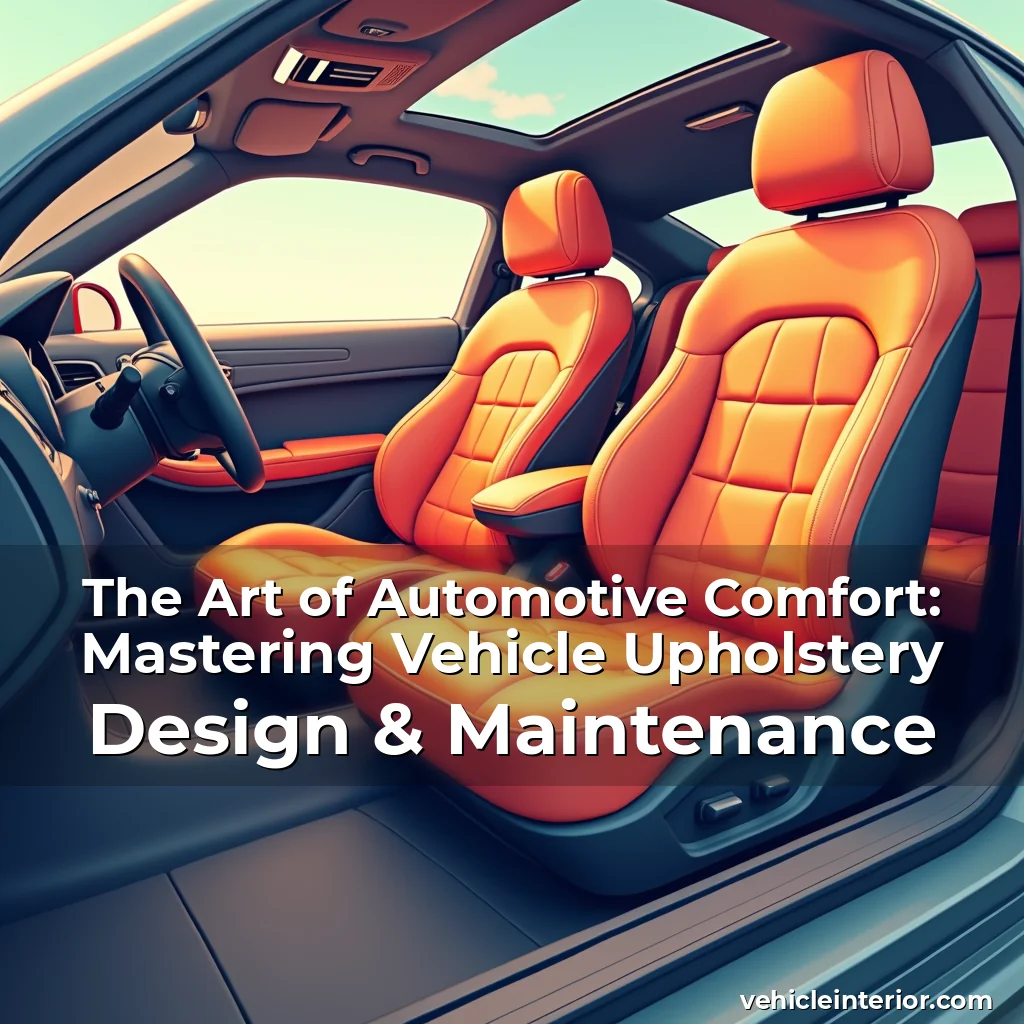
The Art of Automotive Comfort: Mastering Vehicle Upholstery Design & Maintenance
Vehicles are not merely modes of transportation; they are extensions of our lives, reflecting both functionality and style. Among the many factors contributing to this experience, vehicle upholstery stands out as a critical element that influences comfort, aesthetics, and even safety. From the texture of the seat cushions to the resilience of the dashboard panels, every component plays a role in shaping the driving environment.
Modern vehicle upholstery has evolved far beyond basic functionality. Today, it combines advanced materials, innovative designs, and cutting-edge technologies to enhance user experiences. Whether you’re a casual commuter or a performance enthusiast, understanding the intricacies of vehicle upholstery can transform your journey into a truly personalized adventure.
Understanding the Role of Vehicle Upholstery
Vehicle upholstery serves purposes beyond mere decoration. It acts as the primary interface between occupants and the vehicle itself, ensuring comfort during long drives and providing structural support in case of accidents. High-quality upholstery also contributes significantly to the resale value of a vehicle, as buyers often prioritize interior condition alongside exterior appearance.
In addition to comfort and safety, upholstery plays a vital role in noise reduction and thermal regulation. Well-designed seating systems incorporate padding and contouring that minimize fatigue during extended trips, while specialized materials help maintain optimal cabin temperatures regardless of external conditions. This multifaceted function makes upholstery an integral aspect of modern vehicle engineering.
- Ergonomic Support: Modern vehicles feature upholstered seats designed with human anatomy in mind, reducing strain on muscles and joints during prolonged periods of sitting.
- Safety Compliance: Upholstery must adhere to strict safety regulations, including flame resistance and impact absorption properties that protect passengers in collisions.
Materials Used in Contemporary Vehicle Upholstery
Selecting the right material for vehicle upholstery involves balancing aesthetics, durability, and practicality. Leather remains a popular choice due to its luxurious feel and ease of cleaning, although it requires periodic conditioning to prevent cracking. Synthetic alternatives offer cost-effective solutions with improved water resistance and UV protection compared to traditional vinyl.
Fabric upholstery provides versatility through diverse textures and colors, appealing to those who prefer a more eclectic aesthetic. However, woven fabrics may require special care to avoid staining and wear. Innovations in textile science have led to the development of hybrid materials combining the best attributes of different substrates, offering enhanced breathability and comfort.
Trends in Material Innovation
Recent years have seen significant advancements in sustainable upholstery materials. Recycled fibers and plant-based leathers are gaining traction among environmentally conscious consumers seeking greener alternatives without compromising quality. These innovations not only reduce environmental impact but also contribute to healthier indoor air quality inside vehicles.
Smart textiles represent another emerging trend, incorporating sensors that monitor occupant health metrics such as heart rate and body temperature. While still in early stages, these developments hint at future possibilities where vehicle interiors become interactive environments tailored to individual needs.
Design Trends Shaping Modern Vehicle Interiors
Interior design trends influence not only furniture but also vehicular spaces. Minimalist approaches emphasizing clean lines and neutral palettes dominate contemporary markets, creating serene atmospheres ideal for stress-free commutes. At the same time, bold patterns and vibrant hues continue to attract adventurous drivers looking to make a statement behind the wheel.
Technology integration is reshaping expectations for what constitutes stylish yet functional upholstery. Touchscreen interfaces embedded within armrests, ambient lighting controls integrated into headliners, and voice-activated climate settings demonstrate how designers are redefining the relationship between users and their vehicles’ interiors.
Personalization Options for Unique Styles
Manufacturers increasingly recognize the demand for customized interiors, offering modular configurations that allow owners to tailor their space according to lifestyle needs. Adjustable lumbar supports, removable cup holders, and convertible seating arrangements exemplify this shift towards adaptable living environments within cars.
Digital embroidery and laser-cutting techniques enable intricate detailing previously unattainable with conventional methods. These capabilities empower customers to achieve bespoke finishes ranging from classic stitching motifs to futuristic geometric patterns, transforming standard interiors into canvases expressing personal identity.
Maintenance Practices for Longevity of Upholstery
Prolonged exposure to sunlight, moisture, and daily usage inevitably impacts upholstery integrity over time. Implementing routine maintenance protocols ensures longevity and preserves visual appeal. Regular vacuuming removes dust accumulation that can degrade fabric fibers prematurely, while gentle wiping prevents buildup of oils and residues from skin contact.
Addressing stains promptly minimizes permanent damage risks. Using pH-neutral cleaners specifically formulated for respective material types helps maintain original finish characteristics without causing discoloration or degradation. Avoiding abrasive scrubbing motions protects delicate surfaces prone to abrasion injury.
Seasonal Care Considerations
Seasonal variations necessitate adjustments in care routines. During warmer months, increased humidity levels heighten susceptibility to mold growth on dampened areas, requiring thorough drying after any incidents involving liquids. Winter conditions pose challenges related to salt residue from roadways potentially damaging sensitive fabrics exposed to frequent wiping actions.
Professional detailing services provide expert-level treatment suitable for high-value interiors needing deep cleansing or restoration work. Technicians utilize steam extraction units capable of eliminating deeply embedded dirt particles safely without risking surface integrity, particularly beneficial for premium leather applications.
CUSTOMIZATION OPTIONS AND UPGRADING YOUR VEHICLE INTERIOR
Owners seeking to elevate their driving experience often explore customization avenues extending beyond factory offerings. Aftermarket suppliers specialize in providing upgraded components compatible with various models, enabling transformations limited only by imagination rather than manufacturer constraints.
Custom seat covers made from durable microfiber or reinforced mesh offer enhanced comfort while protecting against scratches and spills. Luxury insertions featuring memory foam layers beneath existing cushioning increase pressure distribution efficiency, alleviating discomfort associated with long-distance travel scenarios.
BALANCING STYLE WITH FUNCTIONALITY IN UPHOLSTERY CHOICES
While aesthetics drive initial purchasing decisions, functionality ultimately determines satisfaction level across different driving situations. Selecting materials resistant to fading improves visibility during daylight hours, whereas breathable fabrics aid ventilation efforts especially noticeable in hot climates.
Integrated storage compartments within redesigned console areas maximize usable space without sacrificing elegance. Cleverly placed pockets along seatbacks accommodate small items securely, preventing clutter accumulation that detracts from overall presentation quality.
SAFETY CONSIDERATIONS IN MODERN UPHOLSTRY DESIGN
Ensuring passenger security demands rigorous attention to upholstery specifications meeting established safety benchmarks. Fire retardancy certifications verify compliance with regulatory requirements aimed at minimizing ignition hazards posed by electrical faults or accidental sparks near combustible materials.
Airbag deployment effectiveness relies heavily upon consistent thickness measurements maintained throughout entire seating surfaces. Variations exceeding acceptable tolerances risk delaying inflation timing crucial for effective collision mitigation strategies relying on precise sensor readings.
INNOVATIVE APPROACHES TO IMPROVED SAFETY PERFORMANCE
Research initiatives focusing on developing shock-absorbing foams integrate energy dissipation mechanisms that reduce force transmitted toward occupants during abrupt stops or rollover events. Such breakthroughs promise substantial improvements in survival rates among motor vehicle crash victims.
Smart sensing fabrics equipped with pressure-sensitive nodes detect occupancy status automatically adjusting restraint system tension accordingly. This adaptive capability enhances protection accuracy by tailoring response parameters based upon real-time data inputs gathered continuously via embedded monitoring networks.
TECHNOLOGICAL ADVANCEMENTS SHAPING THE FUTURE OF AUTOMOTIVE INTERIORS
Rapid progress in smart textile technology heralds new frontiers for vehicle upholstery innovation. Conductive threads woven into fabric bases facilitate seamless connectivity between wearable accessories and onboard entertainment systems, allowing hands-free operation of multimedia functions through natural gestures performed on designated zones.
Self-healing polymers applied as coatings over susceptible regions repair minor damages autonomously, prolonging service life considerably. This regenerative property reduces frequency of required repairs, lowering long-term ownership costs significantly for consumers prioritizing convenience above all else.
EMBRACING SUSTAINABILITY THROUGH MATERIAL RECYCLATION PROGRAMS
Environmental consciousness spurs adoption of circular economy principles within automotive industries focused on reducing waste generation. Programs encouraging return of old upholstery pieces for repurposing into secondary products divert landfill-bound materials successfully converting them into useful goods instead.
Biodegradable adhesives replace toxic chemical bonding agents commonly found in traditional manufacturing processes, decreasing harmful emissions released during production cycles. These eco-conscious modifications align industry practices closer to global sustainability goals without compromising product quality standards expected by discerning clients worldwide.
CONCLUSION
Vehicles remain dynamic spaces continually evolving alongside technological advances impacting nearly every facet of their construction—including interior furnishings like upholstery. Recognizing significance attributed to this seemingly simple component reveals profound implications concerning comfort enhancement, aesthetic expression, and safety assurance.
By staying informed about latest developments influencing material selections, design philosophies, and maintenance methodologies, individuals gain power to shape their own mobility narratives uniquely. Embracing opportunities afforded through intelligent choices transforms ordinary journeys into extraordinary experiences worthy of celebration.